
The Maxon Fall 2026 Release Delivers Bigger Worlds, Faster Workflows, and More Creative Control
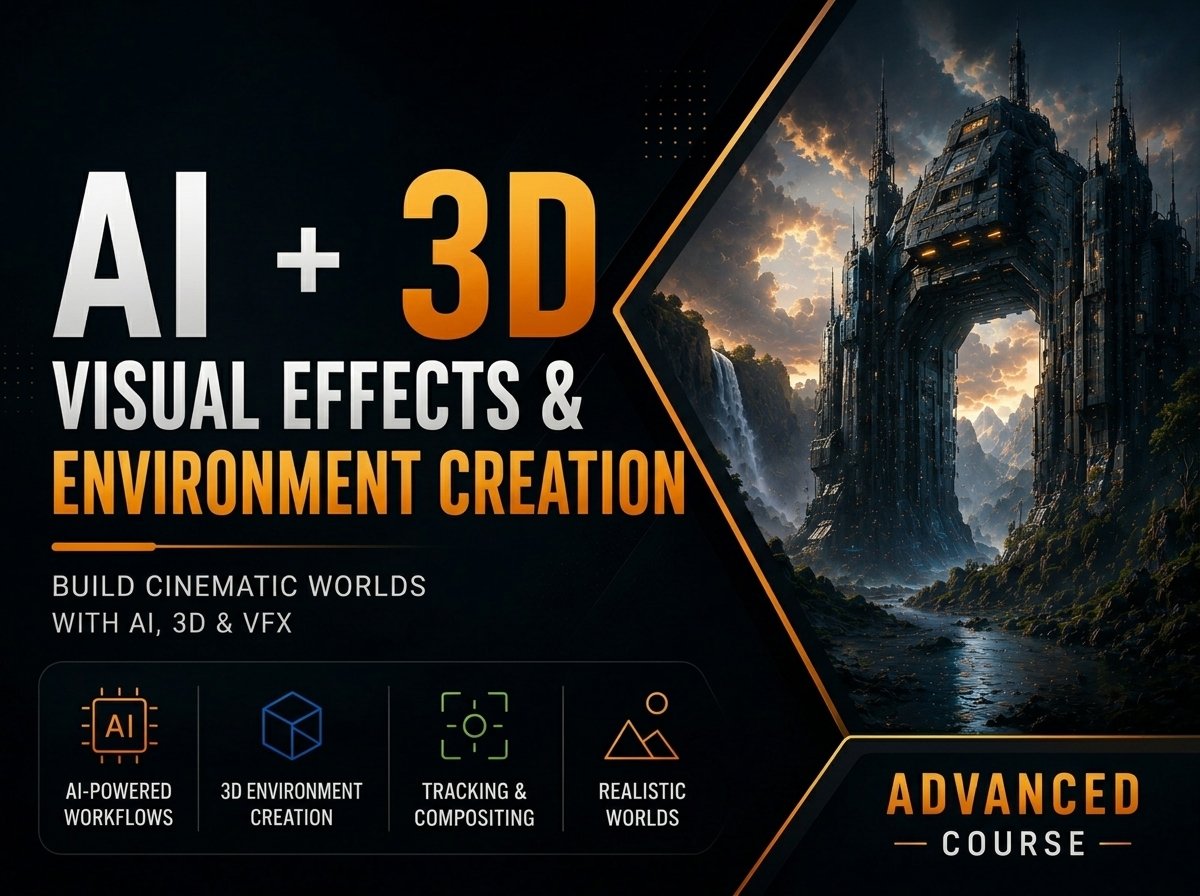
Maxon has officially rolled out its flagship Fall 2026 Release across the entire Maxon One ecosystem, introducing dramatic performance upgrades and creative tools for 3D artists, motion designers, visual effects specialists, and digital sculptors. Encompassing major generational updates to Cinema 4D, ZBrush, Redshift, and the Red Giant suite, this release focuses on three core pillars: constructing vast photorealistic environments, accelerating real-time viewport feedback, and bridging studio pipeline interoperability through OpenUSD.
Whether you are designing cinematic broadcast motion graphics, rendering intricate VFX sequences, or sculpting high-poly creatures for AAA game pipelines, the Fall 2026 update delivers substantial everyday workflow improvements. In this comprehensive technical breakdown, we examine the new feature sets across each application, analyze benchmark performance gains, evaluate studio pipeline integrations, and review licensing considerations.
Major Release Highlights at a Glance
- Cinema 4D Procedural Scattering: Revolutionary field-driven instancing engine capable of populating millions of dense foliage, rock, and urban assets with minimal viewport overhead.
- ZBrush GPU Acceleration: Native graphics card compute integration accelerates dynamic tessellation, high-density mesh subdivision, and smooth brush strokes on multi-million polygon meshes.
- Redshift Real-Time (RT) Expansion: Next-generation RT rendering engine with unified GPU hair and fiber shaders, hardware-accelerated caustics, and native OpenColorIO (OCIO) color management.
- Red Giant & Maxon Capsules: Brand-new Scene Light tools in VFX, volumetric particulate enhancements in Trapcode, and over 150 photorealistic architectural and organic PBR capsules.
Cinema 4D: Procedural Scattering, Liquid FX, and Viewport Speed
Cinema 4D continues to solidify its reputation as the industry standard for motion design while expanding aggressively into complex environment design and dynamic simulation.
1. Next-Gen Field-Driven Scattering
Populating vast landscapes with foliage, debris, and architectural clusters previously required complex third-party plugins or convoluted cloner hierarchies that bogged down the Cinema 4D object manager. The Fall 2026 release introduces a dedicated Procedural Scatter system powered by C4D's robust Fields engine.
Artists can define density masks using vertex weights, slope angles, altitude thresholds, and noise shaders. The viewport renders proxy bounding boxes or point clouds at 60 FPS, while delegating full geometry resolution to Redshift at render time. With non-destructive collision avoidance, instances naturally nestle around rocks, pathways, and tree trunks without manual pruning.
2. Fluid Simulation & Pyro Advances
Building on the unified simulation framework introduced in previous versions, C4D's Pyro system now includes advanced low-viscosity liquid solver routines. Artists can simulate splashing liquids, foam generation, and viscosity transitions seamlessly alongside smoke and fire. The updated solver supports emitter velocity inheritance and surface-tension modifiers, enabling photorealistic product visualization (such as beverage pours and cosmetic creams) without external solver software.
| C4D Simulation Feature | Previous Workflow | Fall 2026 Improvement |
|---|---|---|
| Environment Instancing | Cloner objects (heavy viewport memory drag) | Procedural Scatter with 10x instance capacity and GPU proxy instancing |
| Liquid & Splash Dynamics | Exporting to RealFlow or Houdini Alembics | Native unified liquid and foam solver within Cinema 4D |
| Color Grading Consistency | Manual LUT assignment per project | Native OCIO / ACES 1.3 pipeline across Viewport, Picture Viewer & Redshift |
ZBrush: GPU Acceleration and Advanced UV Master
Historically, Pixol-driven ZBrush relied almost exclusively on CPU multithreading for its digital sculpting operations. While this ensured unmatched stability on low-spec hardware, modern digital sculptors equipped with powerful GPUs left substantial computing potential untapped.
The Fall 2026 ZBrush release introduces Native GPU Acceleration for core sculpting brushes and dynamic mesh subdivision. Artists working on 50-million-plus polygon hero sculpts experience instant brush response with zero stroke latency, even when deploying complex VDM (Vector Displacement Mesh) or IMM (Insert Multi-Mesh) brushes.
Furthermore, UV Master has undergone a comprehensive architectural rewrite. Sculptors can generate clean, distortion-free UV seams and symmetrical unwraps directly within ZBrush, eliminating the need to round-trip meshes into external modeling applications before texturing.
Redshift: Next-Gen Real-Time (RT) and Fiber Shading
Redshift remains the rendering engine of choice for production studios prioritizing speed and visual fidelity. In this release, Redshift RT (Real-Time) transitions from an interactive preview utility to an uncompromising final-frame rendering option for episodic animation and motion graphics.
Hardware-Accelerated Hair & Fiber Shading
Rendering digital hair, grooming splines, and textile micro-fibers has historically carried severe computational penalties. The new Redshift GPU fiber shader uses dedicated hardware ray-tracing cores to calculate multiple scattering and anisotropic specular highlights across millions of hair strands in a fraction of standard render times.
Refined Caustics & Unified Volumes
Glassware, liquids, and architectural pools benefit from optimized photon mapping routines that converge in real time. Combined with unified heterogeneous volume shaders, artists can render smoke, clouds, and laser light cones with accurate absorption and phase functions without introducing firefly artifacts.
Pipeline Interoperability: OpenUSD and Maxon Capsules
As virtual production and multi-DCC pipelines mature, data exchange standards are paramount. Maxon has expanded its OpenUSD (Universal Scene Description) export and import capabilities across both Cinema 4D and ZBrush. Cameras, lights, animated skeletal rigs, and material bindings export cleanly to Unreal Engine, Houdini, and Omniverse with full material fidelity preserved.
Additionally, the Maxon One subscription library receives a massive injection of curated Maxon Capsules. Subscribers gain access to photorealistic scanned rock formations, foliage presets, parametric architectural splines, and physically based surface materials optimized specifically for Redshift.
Frequently Asked Questions (FAQ)
How do I access the Maxon Fall 2026 update?
All active Maxon One and individual product subscribers can update immediately through the Maxon App desktop client. Perpetual license holders can purchase an upgrade or transition to a Maxon One subscription.
Does ZBrush GPU acceleration work on both NVIDIA and Apple Silicon?
Yes. ZBrush GPU acceleration supports NVIDIA RTX hardware via CUDA as well as Apple Silicon (M1/M2/M3/M4) systems using Apple's Metal framework.
Can the new Procedural Scatter in Cinema 4D be used with third-party renderers?
While Procedural Scatter is natively optimized for Redshift and the standard C4D viewport, instances can be baked to standard geometry or exported via OpenUSD / Alembic for use in Octane, Arnold, or V-Ray.
Is Redshift RT suitable for final commercial video exports?
Yes. With the Fall 2026 updates to temporal denoising and ray depth convergence, Redshift RT is production-ready for final broadcast, social video, and episodic rendering.